Safe water every day for marae drinking water suppliers
Kia tiakina te wai hei oranga mō te katoa. Safe water every day for everyone.
The Mitimiti drinking water supply, owned and operated by Mātihetihe Marae in Te Rarawa rohe, shows us what’s possible when communities unite around a common goal: Kia tiakina te wai hei oranga mō te katoa - safe water every day for everyone.
Every day, drinking water suppliers play a vital role supporting the health and wellbeing of people across Aotearoa by providing them with safe, reliable drinking water.
Bacteria, viruses and protozoa (microscopic parasites) in untreated water can make whānau sick. The best way to reduce the risk is to treat the water, to make sure what comes out of the tap is safe to drink.
Everyone who supplies drinking water to more than 25 people – e.g. from a bore or rainwater tank – has a legal responsibility to ensure wai is safe to drink.
Meeting your responsibilities as a water supplier

As the water regulator, the Water Services Authority – Taumata Arowai sets the standards for safe drinking water. We provide several different pathways for people who manage drinking water supplies to meet their responsibilities. In general, the simpler (or lower risk) the supply, the simpler the requirements.
Acceptable Solutions
An Acceptable Solution is one way for some marae drinking water supplies to help make sure their water is safe and complies with regulation. It means water can be treated at or near any buildings where people will drink it. This happens through a treatment system which uses cartridge filters and ultraviolet (UV) light to disinfect the water.
For drinking water supplies like the one in Mitimiti in our video, owned and operated by Mātihetihe Marae in Te Rarawa rohe, following an Acceptable Solution can be a cheaper and easier way to meet legal responsibilities.
Choosing this option means there's no need to complete a drinking water safety plan and to follow the Drinking Water Quality Assurance Rules, but the people managing the supply can still be confident the wai that comes out of the tap is safe to drink in the houses and buildings they serve.
The cost of Acceptable Solutions
The cost of treatment under an Acceptable Solution varies depending on how many people are connected to the drinking water supply, and how they're connected. To treat source water at individual buildings or homes, end-point treatment systems can start at around $2,000.
For a centralised system that treats drinking water and sends it to buildings or homes through pipes, treatment equipment can start at around $15,000. There are also installation and ongoing maintenance costs, such as replacing filters and UV bulbs.
Paying for equipment and installation
People who manage drinking water supplies are responsible for funding the cost of installing and maintaining equipment.
You might be able to secure funding through infrastructure or development funds, such as those administered by Te Puni Kōkiri.
Māori Development Fund – Te Puni Kōkirioutbound
Check with your council to find out about funding available from regional community trusts. Funding may also be available through local community-organised grants.
Finding and installing the right equipment
To find a suitable treatment system, look for a New Zealand supplier of water filters, water purifiers and ultraviolet water treatment systems. Purchasing from a local provider brings protections under the Consumer Guarantees Act and might make it easier to have servicing done when needed.
Who to go to for installation and maintenance depends on your specific situation. People who install and maintain your treatment system, monitor your source water, and manage your operations should be suitably qualified, trained or experienced. Different tasks will need different skills. It’s a good idea to make a list of your requirements and check that anyone who might provide services or products is qualified to help.
A registered plumber must be used to install end-point treatment systems inside buildings. Systems must be installed in line with the manufacturer’s instructions.
Our Find your supply type tool can help you understand the legal requirements for your drinking water supply.
If your marae is connected to the town water supply, then the water should be safe to drink. It is up to you to share any important messages relating to the water, for example passing on Boil Water notices.
Manage risks to your water source
While most homes in New Zealand get their drinking water from centrally treated supplies managed by their local council, many small and rural communities have self-supplied drinking water.
Viruses, microscopic bugs and chemicals can make their way into rivers, bores and storage tanks and without some important steps between source water and the tap, the water is not safe to drink.
It’s important to understand the source water for your marae, and how it could be affected by changes in the land and water it's connected with.
Ground water from springs and bores
Bore water is generally the safest water source, especially if your bore is over 30 metres deep from the surface to the top of the uppermost stone-filtering screen.
Contamination can happen in deeper bores and it’s important to be vigilant. Check with your regional council to learn about the depth of your bore.
Risks to ground water
- A poorly covered or maintained bore could lead to contamination entering the water you’re collecting.
- Farm animals nearby could disturb infrastructure protecting the bore and let contaminants in.
- If the top of the bore is covered by flood water, it’s possible for silt, soil and harmful microscopic bugs to seep in.
- Because water is coming from underground, bores can be contaminated by nearby activities and infrastructure including sewage disposal fields, effluent discharge, underground storage tanks, waste ponds, landfills, offal pits and pesticides.
How to prevent contamination
- Make sure the bore is sealed, with no holes where contamination could enter through rainwater or surface water. You can concrete around the bore to protect it.
- Keep animals at least five metres away from bore infrastructure like pumps, covers and casing.
- Be aware of how land around your source water is used and any risks connected with activities or infrastructure.
- Use an effective treatment system with filtration and UV light.
Roof water collected when it rains
Roof water is exposed to risks.
Risks to roof water
- Poo from animals like birds or possums could be washed off the roof and into storage tanks when it rains.
- A bird, mouse or other small animal could get into a storage tank if it isn’t secured and kept in good condition.
- Tennis balls or similar on the roof can block downpipes and interrupt water supply.
- Wind can carry contaminants onto the roof.
- Sediment building up at the bottom of a tank could contain harmful microscopic bugs.
How to prevent contamination
- Keep your roof clean.
- Stop birds and animals from accessing the roof or getting into tanks. This could include cutting back any overhanging branches.
- Check and clean tanks.
- Use an effective treatment system with filtration and UV light.
Surface water from rivers, streams and lakes
Surface water is exposed to risks and needs to be monitored.
Risks to surface water
- Farming nearby could mean poo from animals makes its way into water.
- People swimming or boating upstream of the water intake could wee or poo, dump waste or disturb silt.
- Heavy rain could wash poo and soil into waterways and cause cloudiness from disturbed dirt, called turbidity. If water is too turbid, filters and UV treatment can’t do their jobs properly.
- Logging or land clearing could cause soil to slip into water, increasing turbidity.
- Pipes carrying wastewater or stormwater could introduce contamination.
How to prevent contamination
- Check your water source and surrounding areas often and keep an eye out for any changes that might bring risk.
- Use an effective treatment system with filtration and UV light.
- Make sure your treatment system is equipped to manage turbidity.
Treat water to make it safe to drink
If your marae manages its own drinking water supply, you have a legal duty to make sure water is safe.
This includes having an effective water treatment system that is installed by a local drinking water professional and regularly maintained. Water from all source types needs to be filtered and disinfected.
To find a suitable treatment system, look for a New Zealand supplier of water filters, water purifiers and ultraviolet water treatment systems. Purchasing from a local provider brings protections under the Consumer Guarantees Act and might make it easier to have servicing done when needed.
Water treatment is not a ‘set and forget’ activity. A treatment system includes some key equipment which should last for many years, but parts need to be checked and replaced to keep a system in good working order.
Cartridge filters
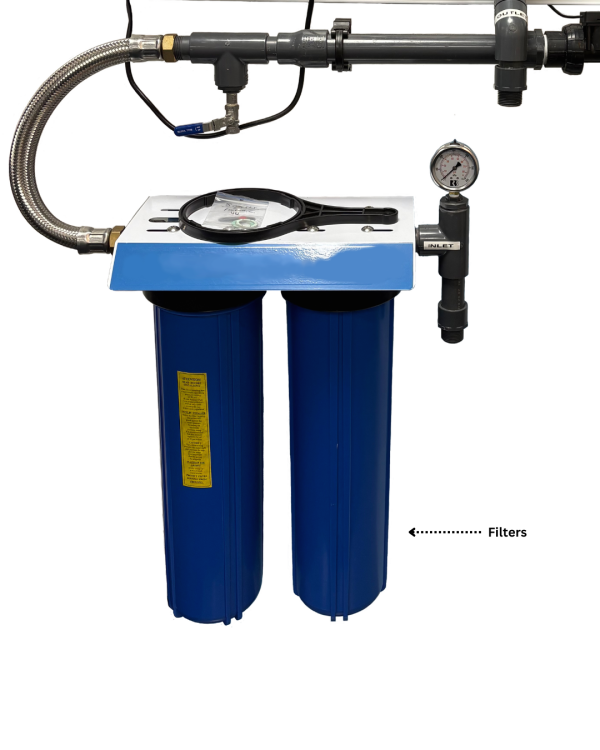 Filters catch dirt and debris so it can’t get into drinking water
Source water (e.g. from a lake, river, stream, bore, roof) passes through filters to remove dirt, debris, and larger bugs. This is an important step because UV light disinfection can only work if water is clear enough for light to reach smaller contaminants.
Recommended filters
It’s best to use at least one cartridge filter with a pore size of five microns or less.
Keep filters working
- Check your filters every month and after weather events like floods, storms, fires and high winds.
- Replace filters if the centre is starting to look dirty or you notice a drop in water pressure.
- If you find your cartridge filter needs changing more than once a month, you might need to install extra filters.
UV light disinfection
UV light kills or neutralises harmful bugs and viruses
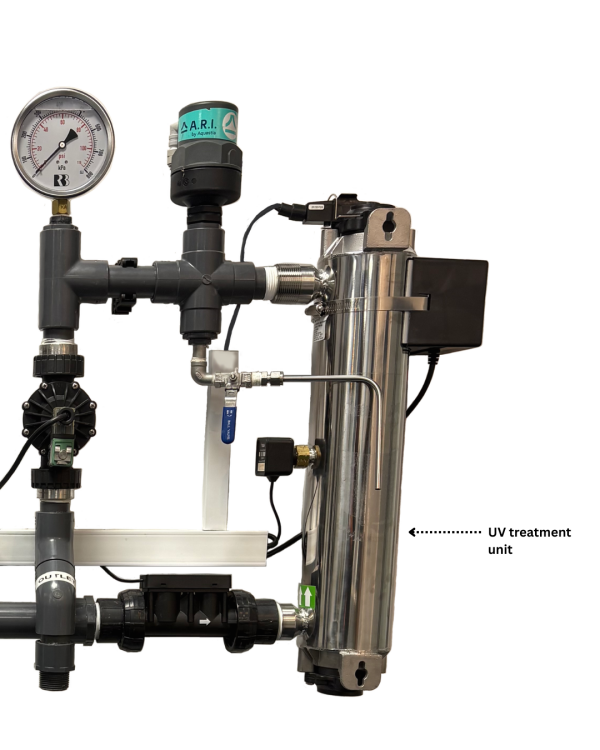
Water moves through UV light to kill microscopic bugs like viruses, protozoa, and bacteria including E. coli, salmonella, giardia and cryptosporidium.
Recommended UV units
Effective UV treatment requires a specific balance between the intensity of light and the speed of water flowing through the unit.
The UV system should:
- deliver a minimum reduction equivalent dose of 40mJ/cm2
- restrict or monitor the flow of water through UV treatment so it meets the manufacturer’s recommended flow rate.
A plumber can install a flow restrictor to help your system achieve the right flow rate.
If your treatment system supplies water to the public, you must use a UV system that has been validated or certified to international standards.
Keep UV light working
- Check lamps once a year and replace them before they expire. Most systems have a counter that will tell you when replacement is due.
- Check lamp sleeves at least once a year, and more frequently if your water is high in minerals. If there is any build-up, clean it away with a damp cloth. A non-abrasive cleaner can be used for stubborn build-up.
- Replace the lamp sleeve if it is damaged.
Backflow prevention
Backflow prevention is a device to stop contaminated water flowing into treated water
Backflow prevention is important for water supplies where treated drinking water is distributed for other purposes, e.g. filling stock troughs.
There are two main types of backflow prevention.
- Air gap. If you have a water storage tank, an air gap uses gravity to make sure contaminated water can’t make its way back into a drinking water supply.
- Valve. A dual-check valve is installed as a connection between pipes. The valve has physical barriers to stop water moving backwards.
Keep backflow prevention working
- For air gap backflow prevention, check at least once a year to make sure the overflow outlet isn’t blocked or obstructed.
- Dual-check valves should be replaced every five years.
Chlorine disinfection
Chlorine helps to keep treated water safe when it moves through pipes
If water will be distributed to others after filtration and UV treatment, a very small amount of chlorine protects against any bacteria that could enter through damaged or worn pipes.
Recommended chlorine dosing
- Do not use bleach that is scented, coloured or foaming.
The dosage depends on the concentration of chlorine in the bleach you use, whether you use a storage tank, the size of your tank and how full the tank is.
See Household Water Supplies (page 34) for more dosage informationoutbound
Keep chlorine working
- Test twice a week with a dipstick or meter.
- If chlorine is a normal part of your water treatment, an unexpected drop in chlorine levels in drinking water could indicate there is contamination coming from a local source. Investigate what might be causing this and increase chlorine dosing to manage the risk.
Water storage tanks
Tanks are used to store water before or after it is treated
Many drinking water supplies use tanks to store water. They are usually made of concrete or plastic. Keeping them in good condition is important to prevent contamination and leaks.
Keep storage working
- Keep tanks clean. It’s best to clean your tank once a year.
- If your drinking water supply is contaminated, it’s important to flush all water out of your tank and disinfect it after you resolve the issue. This prevents any contaminated water making its way through the tap.
Pipes
Pipes carry water from source, to treatment, to taps
Drinking water pipes are usually made of plastic. Some older pipes might be copper or even lead. Pipes are sometimes called distribution or reticulation. They are a crucial part of delivering safe water because contamination can enter through damaged or worn pipes.
Keep pipes working
- Know where your pipes are. If you didn’t map your pipes when they were installed, it’s good to record any pipe locations you become aware of. GPS smartphone apps can be useful.
- Install signs to prevent damage through digging.
- Check the pipeline once a year, ideally in summer when ground is dry. Fresh or healthy grass growth in an otherwise dry area can indicate a leaking pipe.
Help from a professional
Who to go to for installation and maintenance depends on your specific situation.
People who install and maintain your treatment system, monitor your source water, and manage your operations should be suitably qualified, trained or experienced. Different tasks will need different skills. It’s a good idea to make a list of your requirements and check that anyone who might provide services or products is qualified to help.
A registered plumber must be used to install end-point treatment systems inside buildings. Systems must be installed in line with the manufacturer’s instructions.
Our ‘Find your supply type’ tool can help you understand the legal requirements for your drinking water supply.

Testing will not make water safe to drink but it is a useful way to confirm your treatment is working properly.
Use a registered laboratory to test for contamination in drinking water.
Keep whānau and manuhiri informed
If your water becomes unsafe to drink, you need to keep everyone informed.
Signs near taps make it easier to keep everyone safe from drinking contaminated water.
- Use plain, clear language.
- Use illustrations or visuals so people who can’t read English can understand.
- Make sure signs can’t blow away in the wind or be easily removed.
- Replace signs that are faded or damaged.
- If you have a website and/or social media, use these channels to share any information or updates about drinking water.
Put a Boil Water or Do Not Drink notice above the taps if the water at your marae might not be safe to drink.
Make sure signs are visible and up to date.
Be prepared for emergencies
Bad weather, power cuts and natural hazards can pose many – including interruptions to water supplies. Some water supplies have a legal responsibility to plan for emergencies, and it’s a good idea to be prepared.
Make sure you have a plan and are prepared for emergencies.
- Treatment system failure. Storms and bad weather can affect treatment when power cuts turn off machinery or heavy rain makes source water too cloudy for UV systems to function.
- Damage to infrastructure and equipment. Weather, natural disasters or human activity could interfere with pumps, pipes, sheds or bore covers.
- Blocked roads. If your site is remote and roads are cut off, whānau and manuhiri won’t have the option to buy bottled water or get water from a town supply.
- Increased risk of source water contamination. Heavy rain and natural disasters like floods, storms and earthquakes can cause a range of issues for source water. Animal waste from a nearby farm could be washed into a river. Silt could build up on top of a bore. Increased cloudiness (called turbidity) could prevent UV treatment from killing harmful bacteria and parasites.
If you have any doubts about the safety of drinking water after an emergency, post a Boil Water or Do Not Drink notice.
Share our kaupapa
If you're an iwi/hapū organisation, we would love your help to ensure marae and small communities understand their responsibilities when it comes to supplying drinking water. We have social media, newsletter and website content you can share along with our video.